
Ford County Criminal Case Files
A Ford County criminal court record is the official court case file kept after a criminal matter is filed in the Kansas District Court or, for city ordinance cases, in a municipal court. The district court file can include the charging paper, court minutes, docket events, bond orders, motions, plea entries, trial settings, disposition, sentencing journal entries, probation terms, restitution, and court costs. The Ford County Clerk of the District Court is the local court office for district court copies and certified records.
Kansas District Courts are the trial courts of general jurisdiction. In Ford County, the District Court sits in the 16th Judicial District and handles felony criminal cases, state-law misdemeanor cases filed there, protection matters, juvenile matters, and traffic matters filed under state law. Dodge City Municipal Court is separate. It handles city ordinance and many municipal traffic cases, so a person may need that court for a city charge even when the search phrase says Ford County criminal court records.
The Ford County Attorney's Office is the local prosecutor's office. It works with law enforcement on charging decisions and prosecutes criminal cases within its authority. The prosecutor's filed charge may differ from the arrest label shown at booking, which is why the court file is the better source for current charge status and outcome.
The Ford County Attorney official page is the source for this prosecutor-channel image.
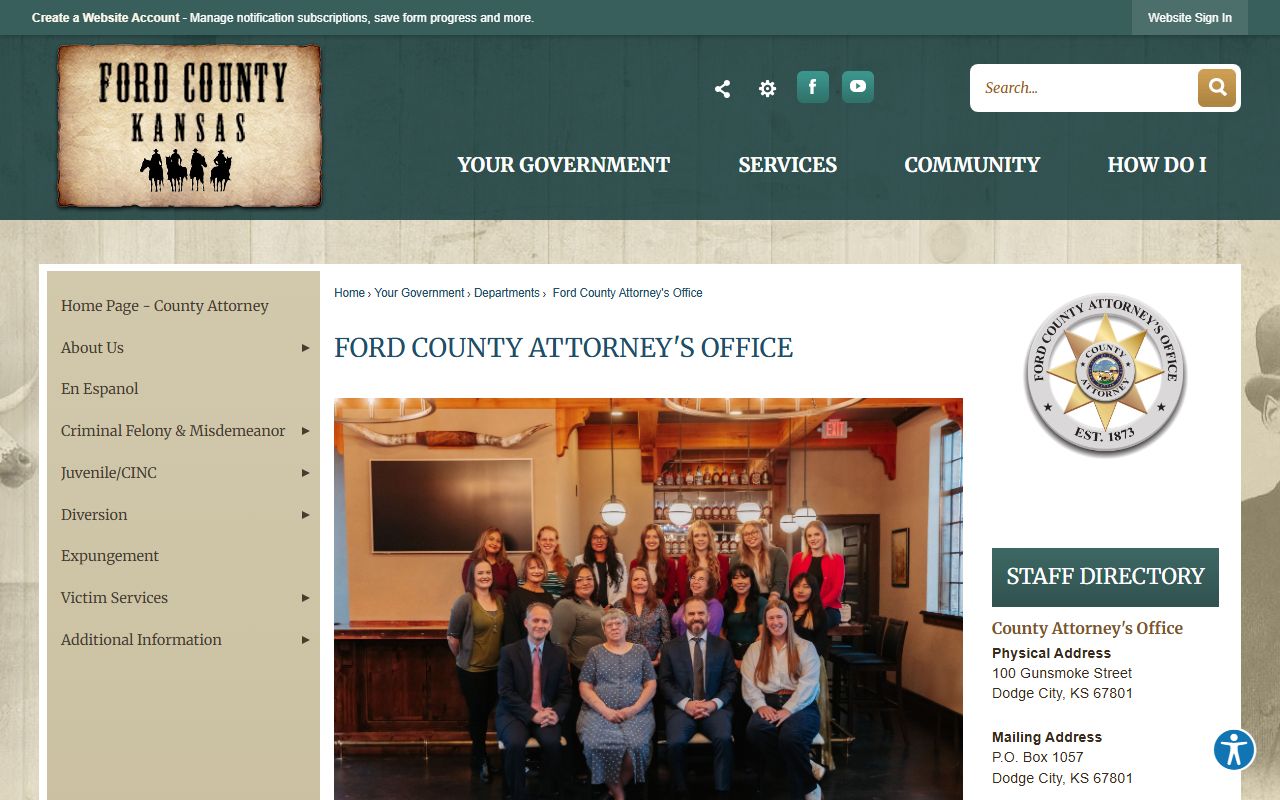
That office page supports the distinction between an arrest event and the formal court prosecution that appears in Ford County criminal court records.
Search Ford County Criminal Records
The main online route is the Kansas District Court Public Access Portal, with the Kansas case search entry also listed in the research file. Ford County is part of the statewide Kansas court structure, so users should not expect a separate Ford County-only criminal docket database. If a case is not visible online, the next step is the Clerk of the District Court at the Ford County Courthouse in Dodge City.
- Start with the Kansas District Court Public Access Portal or the Kansas court search entry, not a commercial people-search site.
- Select Ford County when the system offers a county filter.
- Search by case number if known, because a case number avoids most similar-name problems.
- Use party name and date range when the case number is not known.
- Open the case result and note the case number, filing date, court, charge entries, disposition, and next hearing.
- Contact the Clerk of the District Court for certified copies, older files, or documents not available online.
Kansas also has a KBI criminal history record check, but that output is not the same thing as the Ford County criminal case file. A criminal history check may summarize reportable arrest and disposition data. The court file is where docket entries, motions, pleas, sentencing entries, and copy requests belong. For a closer look at the charge list itself, the Ford County arrest records and court charges page separates arrest labels from filed charges.
Ford County Criminal Case Flow
Criminal case events are easiest to read in order. A Ford County District Court file often starts when the prosecutor files a complaint or information. The first court events may include bond, appearance, appointment or entry of counsel, and arraignment. Later entries can show motions, continuances, plea settings, trial settings, dismissal, diversion, conviction, sentencing, probation, restitution, or expungement activity. Municipal cases follow their own city court process.
Case flow: Charges Filed › Arraignment › Pretrial and Motions › Plea or Trial › Disposition › Sentencing
| Stage | What the Criminal Court Record May Show |
|---|---|
| Charges filed | Complaint, information, count numbers, statute references, severity level, and filing date. |
| Arraignment | Defendant appearance, counsel status, plea entry, and future hearing dates. |
| Pretrial and motions | Bond changes, discovery motions, suppression motions, continuances, warrants, and scheduling orders. |
| Plea or trial | Plea agreement, trial result, acquittal, conviction, dismissed counts, or amended charges. |
| Sentencing | Jail or prison term, probation, fines, costs, restitution, supervision terms, and journal entry. |
The docket is a running event list. It may not include every document image. Certified copies, sentencing journal entries, or older paper records may still require clerk help even when the public search result confirms that the case exists.
What Ford County Criminal Records Show
Ford County criminal court records use the same broad case fields found in Kansas district court files. Some entries identify the court, case type, parties, attorneys, docket events, hearings, financial obligations, and disposition. Restricted data, including juvenile details, protected addresses, Social Security numbers, financial account numbers, and sealed material, should not appear in ordinary public results.
| Field | What It Shows |
|---|---|
| Case number | The Kansas district court number used for search, copy requests, and clerk communication. |
| Defendant and parties | Public names and roles when not restricted by law or court order. |
| Charges and counts | Each charged offense, count number, statute or ordinance, severity, and later amendments. |
| Docket entries | Hearings, motions, warrants, bond events, pleas, orders, continuances, and sentencing entries. |
| Disposition | Dismissed, diverted, convicted, acquitted, pleaded, transferred, or otherwise resolved. |
| Sentence and financials | Probation, custody, fines, court costs, restitution, bond, or payment status where public. |
The Kansas Department of Corrections KASPER offender search is the source for this statewide offender-search image.
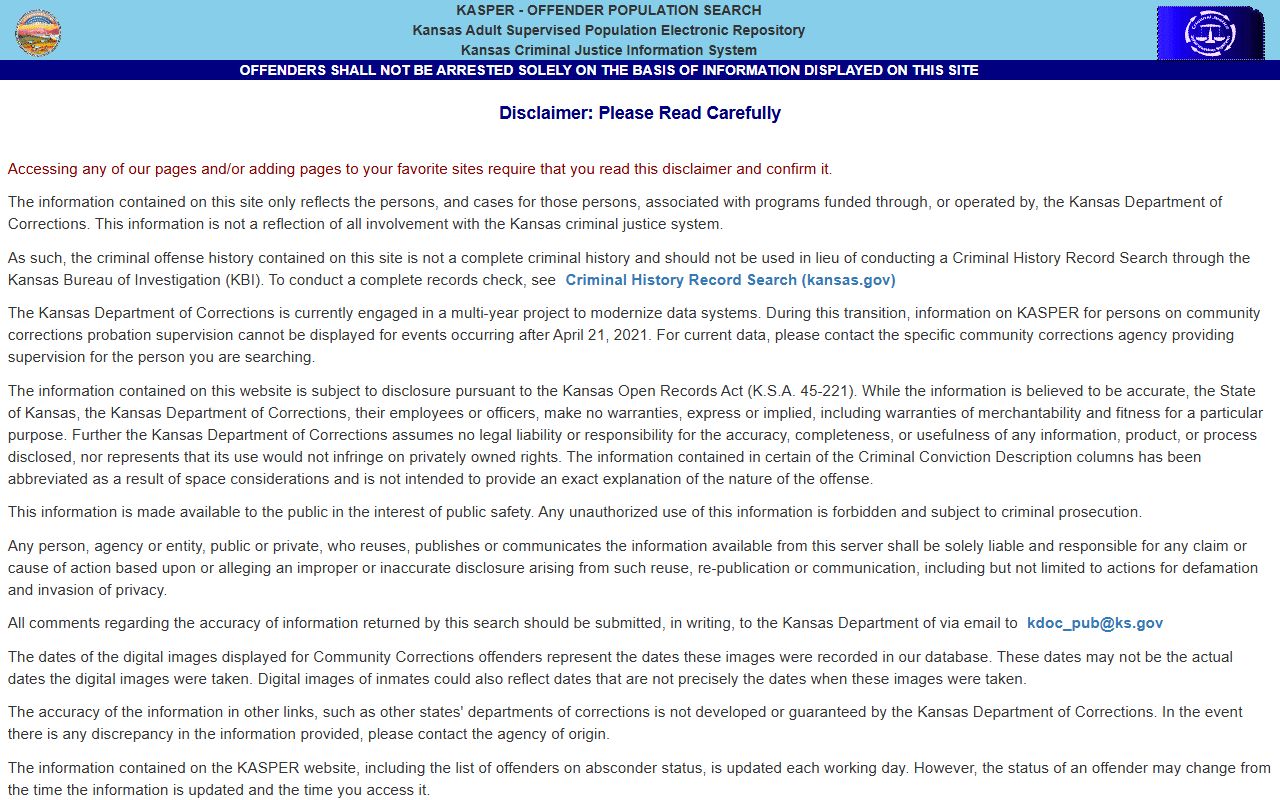
KASPER can help after sentencing or KDOC supervision, but it does not replace Ford County District Court docket entries or certified criminal court records.
Charges and Convictions Compared
A filed charge is an accusation. A conviction is the result of a guilty plea, no-contest plea accepted by the court, or trial verdict. Ford County criminal court records can show both, and they can also show charges that were amended, dismissed, reduced, diverted, or resolved without conviction. A record user should read each count separately because one case may end with different outcomes for different counts.
| Point | Charge | Conviction |
|---|---|---|
| Meaning | A filed accusation by complaint, information, indictment, or amended pleading. | A court outcome that establishes guilt by plea or verdict. |
| Where it appears | Charge list, docket entries, complaint, information, bond, and hearing events. | Disposition, journal entry, sentencing order, and sometimes financial fields. |
| Can change | Yes. Counts may be amended, reduced, dismissed, or added. | Later changes usually require appeal, post-judgment relief, or expungement. |
| How to verify | Check the current docket and charging document. | Check the final disposition and sentencing entry. |
Disposition and Sentence Entries
Disposition is the court outcome for the case or count. Common results include dismissed, guilty, not guilty, no contest, diversion, acquittal, transferred, or closed after sentencing. Sentence entries can include jail, prison, probation, fines, court costs, restitution, community corrections, treatment conditions, or other orders. Ford County research did not locate a standalone local specialty-court page, so treatment language should be read as case-specific supervision or diversion unless an official program record says more.
The Kansas Bureau of Investigation registered offender search is the source for this related official criminal-record image.
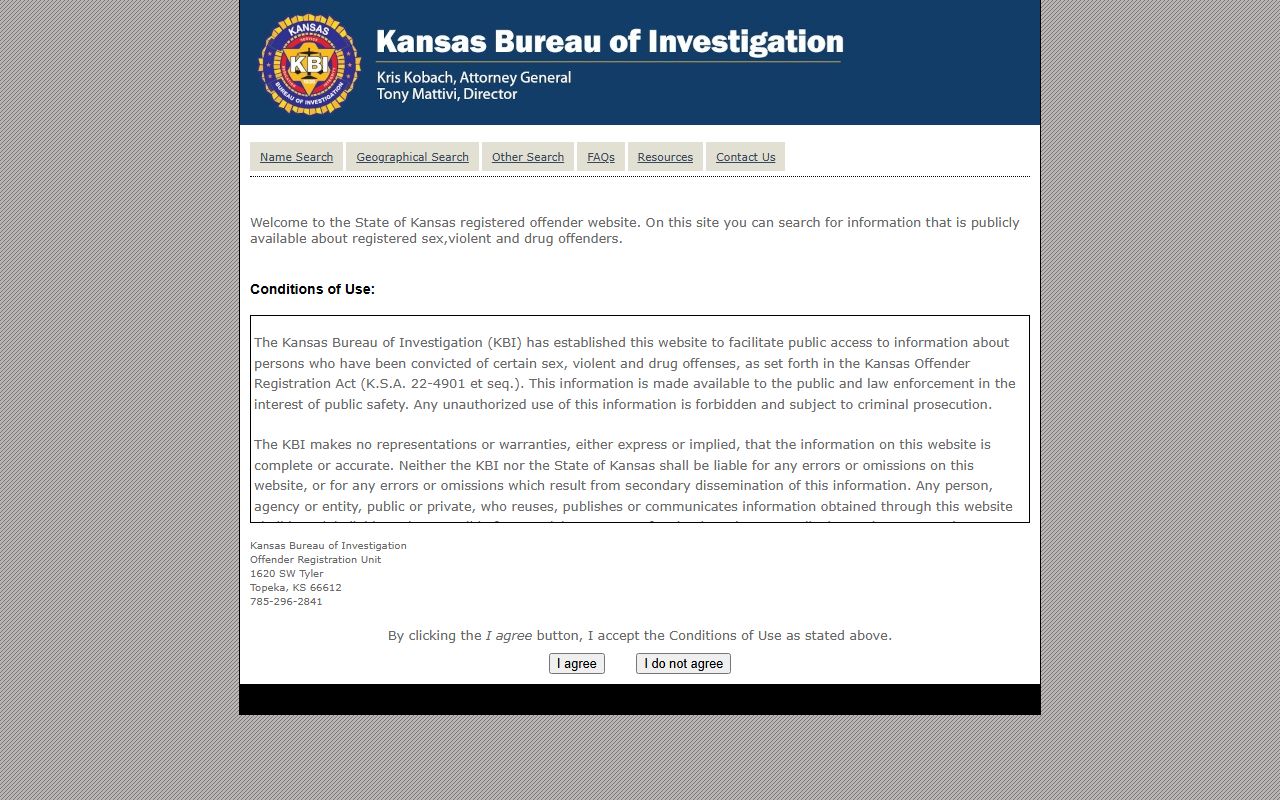
The KBI registry is a separate registry system. It is not proof of every Ford County filing, plea, dismissal, or sentencing document in the underlying criminal case.
Bond and warrant entries can also appear in the criminal docket. A bond entry does not end the case. A bench warrant entry may show failure to appear or another court order issue, while a recall or quash entry can show that the warrant was cleared by later court action.
Note: A docket summary should be checked against the final journal entry before relying on the sentence or conviction status.
Sealed and Expunged Records
Kansas expungement is a court process. For a Ford County District Court criminal case, the petition is filed in the court where the case occurred. Eligibility can depend on offense type, sentence completion, waiting period, payment of obligations, later convictions, pending charges, and statutory exclusions. The research file identifies K.S.A. 21-6614 as the key Kansas criminal expungement statute.
| Point | Sealed | Expunged |
|---|---|---|
| Public access | Hidden from ordinary public view by law or court order. | Removed from ordinary public access after a granted expungement order. |
| Record still exists | Yes, but access is limited. | Yes for certain courts, agencies, and uses listed in Kansas law. |
| How it happens | By statute, court rule, or judge's order. | By filing a petition and receiving a court order when eligible. |
| Ford County path | Ask the Clerk of the District Court about access limits. | Use the Ford County District Court case when the local court handled the case. |
The source for this expungement image is K.S.A. 21-6614.
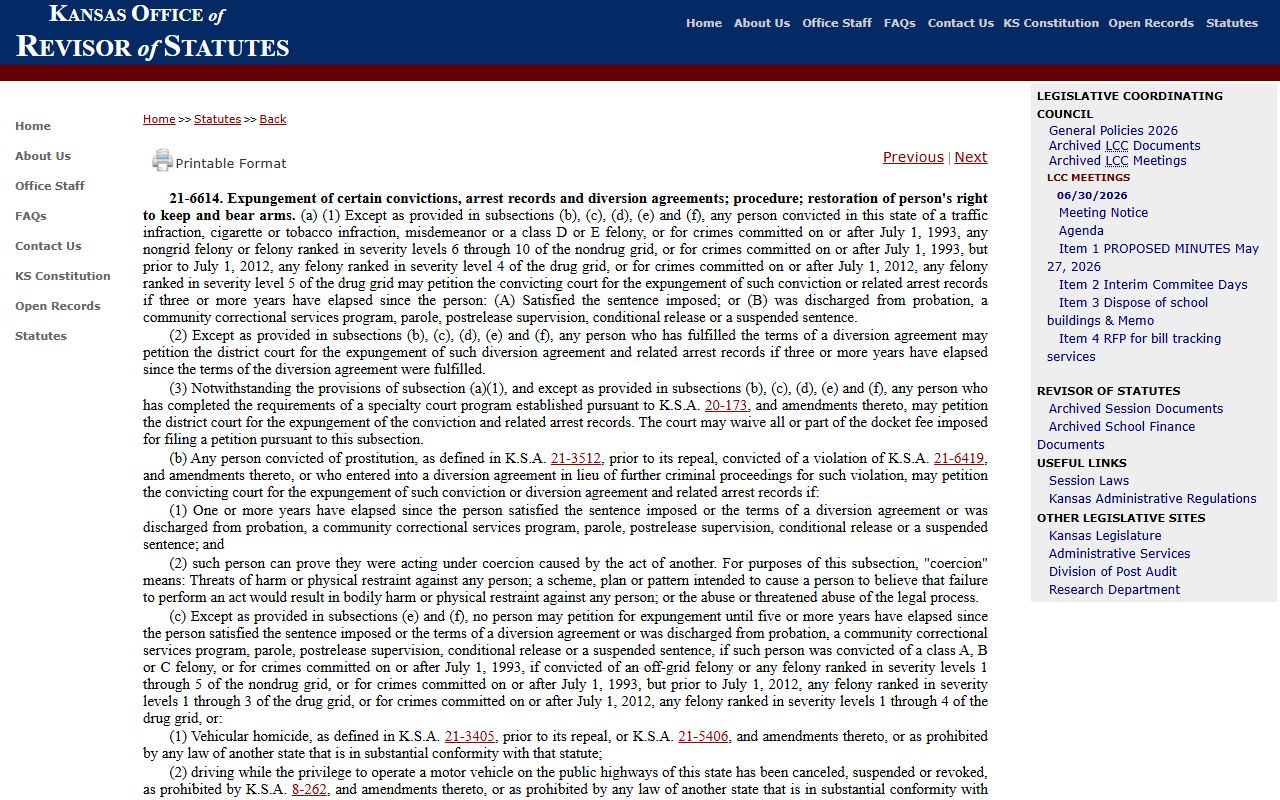
That statute supports careful wording: expungement limits ordinary public access, but it should not be described as a simple deletion from every justice system.
Public Access for Ford County Criminal Records
Kansas law favors access to public records, but court records are governed by both open-records principles and judicial-branch access rules. K.S.A. 45-215 states the public policy of open records, while K.S.A. 45-218 covers inspection and copying of public records. K.S.A. 45-221 lists records that agencies are not required to disclose.
For Ford County criminal court records, the practical path is to search the Kansas District Court Public Access Portal first, then contact the Clerk of the District Court for certified copies, documents not online, older cases, or unclear indexing. County open-records requests are better suited to county administrative records and some nonconfidential county records. Judicial files may need the court clerk's process instead.
Access limit: Juvenile offender records, sealed cases, adoption records, protected identifiers, and active law-enforcement material may be withheld or redacted.
Restricted Ford County Criminal Records
Adult criminal cases are often public, but not every criminal justice record is public in full. Kansas juvenile offender records receive special treatment under K.S.A. 38-2309. Sealed, expunged, adoption, mental health, and protected-person records may be hidden or redacted. Records tied to active investigations can also face law-enforcement limits.
A missing online result does not prove that no Ford County criminal record exists. The case may be in Dodge City Municipal Court, in another county, under a different name spelling, older than the portal index, sealed, juvenile, or not fully converted to online access. The clerk can explain copy procedure, but legal advice and defense strategy should come from an attorney.